
Good Habits, Bad Habits: why willpower isn't the answer
You don't need more willpower. You need to become the architect of your habits.
The big ideas
What the book says, and what it means for how you move, rest and live.
Struggling isn't a personal failing. Context, repetition and reward do the heavy lifting, not willpower.
Around 43% of what we do each day is habit, and autopilot takes over when you're tired.
A stable context, consistent repetition and an immediate reward program your autopilot.
A new habit takes on average two to three months to feel automatic. Keep showing up.
Make good habits easy (clothes laid out) and bad ones harder (delete the delivery apps).
Try it for the next 3 days
Pick one good habit and remove one step of friction tonight, like laying out your workout clothes. Pick one bad habit and add one step, like moving a delivery app off your home screen. Keep it up for 3 days.
Read the full summary
Why good plans fizzle out
We all have a vision of ourselves: fitter, healthier, calmer and more centred. We start out super motivated, then life happens and the plans fizzle. We're told all our lives to have more discipline and push harder. But that advice may be exactly what's setting us up to fail.
The willpower trap
The gym card collecting dust, the vegetables wilting in the fridge. Our first reaction is to blame ourselves: "I just have zero self-control." But the science tells a different story. We pour our energy into intentions and gritting our teeth, yet the real heavy lifting is done by three other things: context, consistent repetition and reward.
People we think of as super disciplined aren't fighting temptation all day. They're smarter about it. They're architects of their own lives, and they design things so they barely need willpower in the first place.
Your autopilot runs almost half your day
According to the research, about 43% of what we do each day is done out of habit. Almost half of what you do today won't be a conscious choice.
A habit isn't a moral virtue or a character flaw. It's a learning shortcut your brain creates: a cue in your environment triggers a response, and you do it because you expect a reward. It's like having a second self that runs on automatic programs.
That matters most at the end of a long, stressful day. Your conscious mind is fried and your willpower goes offline. That's when autopilot takes over and you fall back on your habits, good or bad.
Three keys to programming your autopilot
- A stable context. The cue for your habit: a place like your kitchen, a time of day or the people around you. Proximity is powerful. Research shows that joining a gym just a little closer to home can be the difference between sticking with it and giving up.
- Consistent repetition. Forget the 21-day myth. Studies show it takes on average more like two to three months for a new habit to feel automatic. There's no magic number; it's showing up and repeating the action that rewires your brain.
- An immediate reward. Ideally within a minute of doing the thing. Your brain gets a hit of dopamine that says, "That felt good, do it again." It's the glue that makes the habit loop stick.
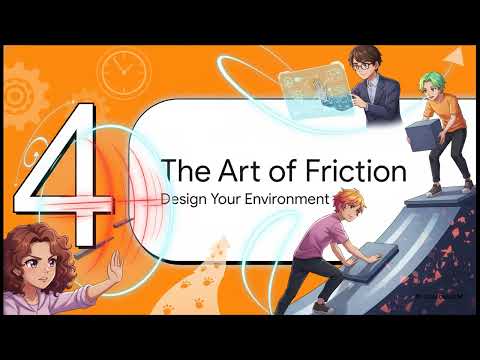
The art of friction
This is where you stop being a victim of your environment and become its architect. For good habits, reduce friction: make them ridiculously easy, like laying out your workout clothes the night before. For bad habits, add friction: delete the food delivery apps or put the cookies on the highest shelf.
Two tools to start today
Habit stacking: piggyback a new habit onto one that's already automatic, so the old habit becomes the trigger. In one well-known study, people were far more likely to floss consistently when they did it right after brushing their teeth.
Habit swapping: simply stopping a bad habit is very hard, because your brain hates a vacuum. Instead, replace it: keep the same cue and change the routine. The cue is getting into bed. The old routine: scrolling on your phone. The new routine: picking up a book.
Become a habit architect
If you take away one thing, let it be this: stop blaming yourself for not having enough discipline. You don't need more willpower. You need to design your environment and routines so the good choices are the easy choices, and success becomes automatic.
Don't try to change your whole life tomorrow. Just ask: what is one tiny thing you can do right now to make one good habit just 1% easier?
Put it into practice
Habits stick when you do them with others. Start one today.
Fittest Start
Join the ExperienceA summary and interpretation by Fittest Club, not affiliated with the author or publisher. General wellness information only, not medical advice.
More from Habilearn
One book, one video, one habit.